

AI Ghostwriting vs Human Ghostwriting: What Authors Should Know in 2026

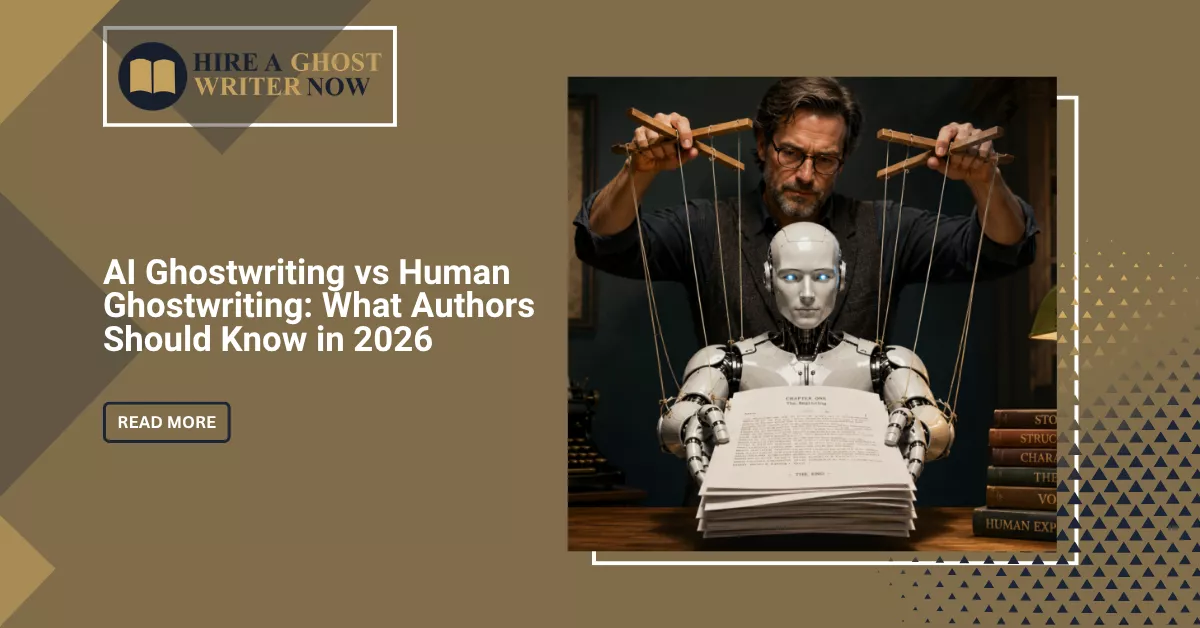
AI tools have changed how authors plan, draft, research, and market books. A writer can now ask a tool for chapter ideas, scene options, title concepts, summaries, outlines, or even rough passages within seconds. For some authors, that feels exciting. For others, it raises a serious question: if AI can produce words so quickly, do authors still need human ghostwriters?
The answer is yes, but the role of ghostwriting is changing.
The debate around AI ghostwriting vs human ghostwriting is not really about speed alone. It is about voice, originality, emotional depth, structure, truth, ethics, and the final reading experience. AI can help with certain parts of the writing process, but a professional human ghostwriter brings judgment, listening, strategy, sensitivity, and storytelling instinct that software cannot fully replace.
This matters even more in 2026 because readers, publishers, platforms, and professional writing organizations are paying closer attention to AI use, transparency, and authorship. The Authors Guild has issued AI best practices for writers and has supported transparency around AI use, while its Human Authored initiative was created to help identify books written through human creative work.
For authors deciding how to write a book, the question should not be, “Can AI write words?” It can. The better question is, “Can this process create a book that sounds true, feels original, serves the reader, and protects my credibility?” This blog follows the AI ghostwriting topic list you provided.
What Is AI Ghostwriting?
AI ghostwriting usually refers to using artificial intelligence tools to generate, develop, or heavily assist with written content that may later be published under a human author’s name.
This can include:
- Brainstorming chapter ideas.
- Creating a rough book outline.
- Drafting sample sections.
- Generating dialogue options.
- Rewriting paragraphs.
- Summarizing research.
- Creating promotional copy.
- Expanding notes into prose.
For some authors, AI is used lightly as a support tool. For others, it may generate large portions of the manuscript. That distinction matters. There is a big difference between using AI to brainstorm chapter titles and using AI to produce entire chapters with minimal human rewriting.
AI tools can be helpful when the author needs speed, structure, or starting points. They can reduce the blank-page problem and help writers explore ideas. However, AI does not truly know the author’s life, memories, business philosophy, emotional history, or personal voice unless a human carefully guides and revises the output.
That is why AI-generated writing often needs heavy human review before it becomes publishable.
What Is Human Ghostwriting?
Human ghostwriting is a professional writing process where a writer helps an author turn ideas, interviews, notes, memories, research, frameworks, or experiences into a finished manuscript.
The author provides the substance. The ghostwriter shapes the book.
A professional human ghostwriter may help with:
- Book concept development.
- Audience positioning.
- Interviews.
- Chapter outlining.
- Narrative structure.
- Storytelling.
- Voice capture.
- Research organization.
- Drafting.
- Revisions.
- Tone refinement.
- Publishing preparation.
The finished book is usually published under the author’s name because the ideas, experiences, and authority belong to the author. The ghostwriter’s job is to bring those ideas into a clear, readable, engaging form.
This is why human ghostwriting is especially valuable for memoirs, business books, leadership books, personal branding books, and expert-led nonfiction. The work depends heavily on listening, judgment, and understanding the author’s deeper intention.
The Biggest Difference: Voice
Voice is one of the clearest differences between AI and human ghostwriting.
AI can imitate tone. It can sound formal, emotional, friendly, professional, humorous, or dramatic. But imitation is not the same as genuine voice.
A human ghostwriter studies how the author speaks, thinks, explains, remembers, and responds. They listen for repeated phrases, emotional patterns, pacing, humor, hesitation, confidence, and worldview. They notice what the author avoids saying as much as what the author says directly.
This is especially important in author voice ghostwriting. Readers can often feel when a book sounds generic. They may not know exactly why, but the writing feels polished without personality. It has sentences, but not a living point of view.
A strong human ghostwriter helps the book sound like the author on their clearest day. The writing is organized and polished, but it still carries the author’s rhythm, emotional truth, and perspective.
Originality and Lived Experience
AI can assemble patterns from language. It can produce fluent paragraphs that resemble existing forms of writing. But books are not only made of fluent paragraphs.
Strong books need original insight.
For memoirs, that originality comes from lived experience. For business books, it comes from real expertise, hard-earned lessons, client stories, frameworks, failures, and decisions. For leadership books, it comes from what the author has seen, built, risked, changed, or learned over time.
A human ghostwriter knows how to uncover those details.
They ask follow-up questions. They challenge vague answers. They notice when an anecdote has more emotional weight than the author realizes. They help turn raw memory into a readable scene and scattered expertise into a structured argument.
This is one reason memoir ghostwriting trends continue to matter. More authors are using books to preserve family stories, process personal journeys, share trauma-to-triumph experiences, and create legacy projects. Those books need more than automated text. They need care, context, and emotional accuracy.
Emotion and Human Depth
AI can write emotional language, but it does not feel emotion.
That matters.
A human ghostwriter can recognize when a scene needs restraint instead of drama. They can sense when a difficult memory should be handled gently. They can help the author avoid turning pain into performance. They can also identify where emotion is missing and ask the questions needed to bring it forward.
This is especially important in memoir, personal branding books, and thought leadership titles. A book may contain useful information, but readers remember the emotional connection. They remember the moment the author becomes real.
AI may produce a sentence that sounds moving. A human ghostwriter can help build an emotional arc across chapters. That difference is significant.
Structure and Story Shape
AI can create outlines quickly, but a good book structure requires more than a list of chapters.
A professional ghostwriter thinks about the reader’s journey. They ask:
- Where should the book begin?
- What does the reader need to understand first?
- Where does the author’s strongest story belong?
- Which chapters repeat the same idea?
- Where does the emotional arc rise or fall?
- What should the reader believe, feel, or do by the end?
This is where human ghostwriting becomes strategic. The writer is not simply producing words. They are shaping a book.
In thought leadership ghostwriting, structure is especially important. CEOs, consultants, coaches, speakers, and experts often have many ideas, but those ideas may be scattered across speeches, podcasts, workshops, LinkedIn posts, client conversations, and notes. A ghostwriter helps turn that material into a coherent authority-building book.
AI can help organize early thoughts. A human ghostwriter decides what belongs, what does not, and how the book should build.
Accuracy and Fact-Checking
AI tools can produce incorrect information with confidence. This is a major risk for authors.
A book may include dates, names, statistics, quotes, historical references, legal issues, medical information, business claims, or personal details. If those facts are wrong, the author’s credibility suffers.
Human ghostwriters are not automatically perfect, but professional writers know accuracy matters. They can flag claims that need verification, ask for source material, check internal consistency, and avoid unsupported statements.
For business authors, doctors, lawyers, coaches, consultants, and public figures, accuracy is not optional. A book can strengthen credibility, but only if it is trustworthy.
This is one reason many authors still prefer human ghostwriting for serious projects. AI can assist, but the final responsibility must remain with people who understand context and consequences.
Ethics and Transparency
The ethics of AI-assisted writing are now a major publishing concern.
Authors, ghostwriters, publishers, and platforms are all asking how much AI use should be disclosed, what counts as authorship, and whether readers have a right to know how a book was created.
The Authors Guild’s updated AI guidance discusses disclosure and professional risk, and other writing organizations have also emphasized the importance of transparency when writers for hire use AI in client work.
This is where ghostwriting ethics becomes important.
Traditional ghostwriting has long existed as a professional collaboration. The credited author supplies the ideas, stories, experience, or expertise, while the ghostwriter helps shape the manuscript. Ethical ghostwriting is based on consent, confidentiality, agreed ownership, and clear expectations.
AI complicates that relationship. If a ghostwriter uses AI heavily without telling the client, that may create trust issues. If an author publishes AI-generated material without understanding platform rules, copyright questions, or reader expectations, that may create future problems.
Ethical practice in 2026 requires clarity. Authors should know how their manuscript is being created.
Can AI Replace Ghostwriters?
The question of AI replacing ghostwriters is understandable, but it oversimplifies the issue.
AI can replace some basic writing tasks. It can draft generic content, summarize notes, create outlines, suggest angles, and produce rough copy quickly. For low-stakes projects, that may be enough.
But serious books need more than output.
They need direction, strategy, emotional intelligence, deep revision, judgment, and author trust.
AI may help a founder brainstorm a chapter on leadership. A human ghostwriter can interview that founder, uncover the real story behind the lesson, shape it into a compelling narrative, and make sure the chapter strengthens the author’s brand.
AI may summarize a podcast transcript. A human ghostwriter can decide which idea should become a chapter, which story should open the book, and what readers need to take away.
AI is changing ghostwriting, but it is not removing the need for human craft.
Where AI Is Actually Useful
AI can be helpful when used carefully.
Authors and ghostwriters may use it for:
- Early brainstorming.
- Alternative title ideas.
- Chapter prompt lists.
- Research organization.
- Transcript summaries.
- Marketing copy drafts.
- Outline variations.
- Reader persona exploration.
- Social media ideas.
These uses can save time. They can also help authors think through options before committing to a direction.
The problem begins when AI is treated as the author.
A useful tool should support the creative process, not replace the human source of meaning.
Why Human Ghostwriters Still Matter
Human ghostwriters remain valuable because books are personal, strategic, and relational.
A good ghostwriter can listen deeply. They can recognize the author’s strongest idea. They can sense when the manuscript is losing focus. They can shape complex material into a clear reader journey. They can ask uncomfortable but necessary questions.
For founder ghostwriting, this matters because entrepreneurs often want a book that does more than tell a company story. They want to build trust, attract attention, explain their philosophy, strengthen investor confidence, or support speaking opportunities.
For personal branding ghostwriting, the book becomes part of the author’s public identity. It must sound credible, authentic, and aligned with the author’s professional reputation.
AI can assist with pieces of this process. A human ghostwriter manages the whole creative and strategic arc.
Reader Trust in the Age of AI
Readers are becoming more aware of AI-generated content.
Some readers may not mind AI assistance. Others may strongly prefer human-created books, especially memoirs, literary work, expert books, and emotionally personal stories. The Authors Guild’s Human Authored certification was launched partly because many authors and readers wanted a clearer way to distinguish human-created works in a market where AI content is increasing.
This does not mean every use of AI is wrong. It means authors need to think carefully about trust.
If a book is marketed as a deeply personal memoir, readers expect genuine human memory and reflection. If a business book is sold as the author’s hard-earned expertise, readers expect real insight, not generic machine-generated advice.
Trust is part of the product.
Which Option Is Better for Authors?
The best choice depends on the project.
AI support may be useful if the author needs brainstorming, rough notes, simple summaries, or early structural help.
Human ghostwriting is better when the book requires:
- A strong author voice.
- Original stories.
- Emotional depth.
- Careful structure.
- Credible expertise.
- Sensitive material.
- High professional standards.
- Long-form narrative.
- Brand alignment.
For most serious authors, the best process may be hybrid but human-led. AI can help with preparation and efficiency, but the book should still be shaped, reviewed, and refined by people.
Questions Authors Should Ask Before Choosing
Before choosing between AI support and human ghostwriting, authors should ask:
- What is the purpose of this book?
- Will readers expect personal truth or professional expertise?
- Does the book need a distinctive voice?
- Will this book affect my reputation?
- Do I understand how AI is being used?
- Who owns the final manuscript?
- Has the content been fact-checked?
- Does the writing sound like me?
These questions help authors avoid shortcuts that may create problems later.
Final Thoughts
The debate around AI ghostwriting vs human ghostwriting is not about whether AI can generate text. It can. The real issue is whether that text can become a book that feels authentic, original, accurate, ethical, and emotionally meaningful.
AI is useful for brainstorming, organizing ideas, generating options, and speeding up certain tasks. But human ghostwriters bring voice, judgment, sensitivity, structure, and story sense.
In 2026, authors do not need to reject AI completely. They do need to use it wisely.
For books that carry personal stories, professional authority, brand reputation, or emotional truth, human ghostwriting still matters.
Because readers do not only want words on a page.
They want a book that feels like it came from a real person with something real to say.